
What stands out most to me in this April edition of THE VIBE is how clearly it reflects the power of people working together. Each story highlights the kind of collaboration that helps our entire university move good ideas forward and create a stronger experience for students across our campus.
Throughout this issue, you will see examples of campus partners coming together in ways that are thoughtful, strategic, and student-centered. These efforts continue to shape how students experience NEBRASKA from their earliest interactions with campus through the communities and support systems that help them succeed.
When we work in partnership, we strengthen not only individual programs and services, but the larger experience of being a Husker. Thank you for the role you play in that shared work and in helping create a university community that shows, every day, there is no place like NEBRASKA.
Dr. Dee Dee Anderson
Vice Chancellor for Student Life
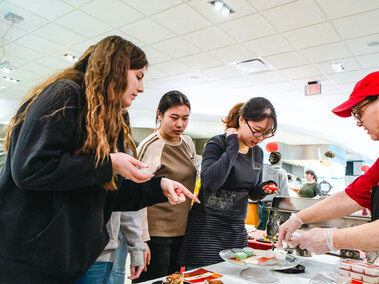
More Options, More Value, More Momentum in Housing, Dining and Unions
For students, campus life is shaped in meaningful ways by the places and services they use every day. Across Housing & Dining and the Unions, that commitment is taking shape through noticeable changes in dining, steady growth in campus housing, and a new dinning commons experience on the way in the Nebraska Unions.
These efforts are about more than adding options. They show a continued focus on giving students services that better match what they want while also making thoughtful decisions about how resources are used.

Dining
Dining Services has made important changes in recent years to better reflect student preferences and strengthen the dining experience.
At Selleck Dining, in addition to Qdoba, students now have access to Runza – a Nebraska staple. Additions like this has broadened the menu and brought in options that students recognize and enjoy. Since those changes were made, Selleck has seen a 16% increase in traffic, growing from 438,942 meals to 509,292 meals.
At Abel Dining, the focus has been on building more in-house capacity. Instead of continuing licensing deals with Salad Works and Fruita Bowls, the university created its own concepts, Salad Day and Goodspoon. That shift gave Dining Services more control over the offerings and also produced financial savings.
Abel Dining has also changed significantly over time, with participation or usage figures of 589,164 meals during 2024-2025 making it the most popular dining option on campus. This is due to the shift from all-you-care-to-eat style dining to mobile ordering.
Mobile dining has been another important development. It has made it easier for students to order meals and pick them up on their own schedule. That convenience has helped drive growth in voluntary meal plans, which increased from 3,036 to 4,170, a 10% increase.
Overall, these changes reflect a dining program that continues to evolve in response to student feedback. Students asked. We listened. The experience is better because of it.
Housing
University Housing has also experienced strong momentum in recent years, with residential student occupancy continuing to rise.
Campus housing occupancy has increased by 200 students from Spring 2025 to 5,343 students living on campus in Spring 2026, reflecting growing demand from students who see clear value in living on campus. That growth has been strong enough that, for the coming year, Housing is reconfiguring spaces in some residence halls to accommodate additional students and make the most of available capacity.
That demand speaks to the value of the residential experience. Living on campus is not only a strong investment for students, but it is also associated with stronger student success outcomes. Residents demonstrate an 85.9% first-year retention rate, compared to 84.8% for non-residents.
Housing has also strengthened its student support model through its partnership with Student Advocacy & Support, including an embedded employee who helps connect students to the SAS office for the support they need. That partnership brings services closer to students and makes it easier to respond when challenges arise.

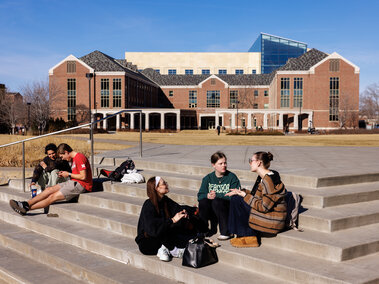
Nebraska Unions
The Nebraska Union is preparing for a new chapter that will bring new life to one of the most-used gathering places on campus. A new dining commons experience will help make the Nebraska Union an even more exciting destination for students and the broader campus community. New flavors. More options. Something for every craving.
The new offerings will include a flagship Husker Heroes, a redesigned Imperial Palace, and a fresh new space for a Nebraska favorite, Valentino’s, along with two new restaurants to be announced soon, all as part of a brand-new dining commons experience scheduled for completion in Fall 2026.
These changes are about more than dining. They reflect a continued investment in the student experience and in the campus spaces that help shape daily life at NEBRASKA. The Nebraska Unions play an important role as a hub for connection, community, and campus activity with over 892,477 visitors per year. These updates are intended to make those spaces feel even more inviting.
The result is a more dynamic experience for students and another example of how Student Life continues to invest in places that make campus life more engaging.
Husker Late-Night Ride Program Expands Safe Transportation for Students
A pilot partnership launched in January 2026 between ASUN and Uber is already making a meaningful impact for University of Nebraska–Lincoln students. The Husker Late-Night Ride Voucher program was created to help undergraduate and graduate students get home safely by providing five $10 Uber ride credits for trips that begin and end within a 3-mile radius of City Campus or East Campus.
Available seven days a week from 9 p.m. to 3 a.m., the program has quickly become a widely used student safety resource. Since launching on January 28, 5,633 students, or 25.9% of UNL students, have claimed vouchers.
The program was made possible through support from Husker Athletics to strengthen student safety. Based on the high level of interest and use during the pilot, Uber is also providing additional financial support to help continue the program. Uber has recognized the initiative as one of the most well-promoted and highly engaged college programs it has seen.
One of the program’s busiest nights came on Thursday, March 26, following the Nebraska men’s basketball game, when students used 347 rides, the highest Thursday total of the semester.

11,572
safe rides provided to students through the Husker Late-Night Ride program, as of April 13, 2026.

2.2 Miles
traveled per ride on average since the pilot began Jan. 28, 2026.
88%
of rides occurred on Thursday, Friday, and Saturday, including 39% on Fridays, 30% on Saturdays, and 19% on Thursdays.

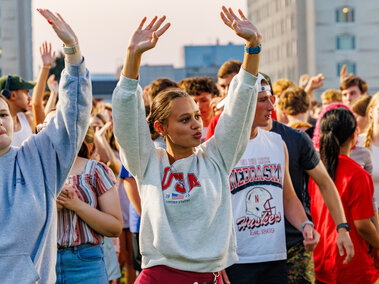
Using Partnership and Insight to Support Students Earlier
The earlier the university can understand where students may be struggling, the better positioned we are to respond. That idea is driving a growing partnership between Student Life, New Student Enrollment, and Undergraduate Education and Student Success.
Through this partnership, Student Life has been working with NSE to gain access to Advising Inventory Survey data. That information can help reveal where early intervention may be beneficial and where students may need support sooner in their college experience. Early outreach to students who had food/housing, financial, and academic concerns was piloted in January 2026, and will be expanded this summer for incoming students this fall.
Student Life has also been working with UESS around the future deployment of the Cornelius AI Chatbot as another tool to help identify early warning signs from students and connect them with support.
By building the right partnerships now and identifying how data can be used more effectively, Student Life and its campus partners are preparing for a more proactive approach to student support.
Red Memorial to Honor Students on May 1
The University of Nebraska–Lincoln community will gather on Friday, May 1, 2026, for the annual Red Memorial, a remembrance honoring students who died in the past year.
The memorial will take place from 4 to 5 p.m. in the Nebraska Union Platte River Room South. Three students will be honored during the ceremony, which is free and open to the public. Faculty, staff, and campus partners are invited to attend and are asked to RSVP by April 27 at go.unl.edu/redmemorial2026.
The program will include brief remarks from T.J. McDowell, Jr., Assistant Vice Chancellor and Dean of Students, individual recognition of the students being remembered, and a moment of reflection led by a member of the Association of Campus Religious Workers.
Later that evening, Broyhill Fountain in the Nebraska Union Memorial Plaza will be illuminated red in memory of the students.
Red Memorial began in 2015 at the request of Keaton Klein’s family, who wished to see the fountains and plaza illuminated red in his memory. Since then, the event has become an annual opportunity for the campus community to gather in remembrance.